Showing posts with label groceries. Show all posts

Thursday, August 12, 2010

Fabulous Cabbage


Do you eat cabbage? We love the stuff. Raw, it's crunchy and a bit peppery. Boiled, it tastes buttery and smooth. And the great thing is, it's super cheap--30 cents a pound the last time I bought some!

Here are three of my favorite cabbage recipes:

Cabbage Patch Soup from allrecipes (pictured above). This recipe is easy and tasty. We use real bacon, double the cabbage, and leave out the peas.

Chicago Dog Salad from Rachael Ray. It sounds weird, but it's really yummy. We shred the cabbage ourselves; it's easy.

Jeanne's Vegetable-Beef Borscht from the Fix-It and Forget-It Big Cookbook. Borscht is a traditional Russian stew. It is usually made with beets, which turn it bright red. I was excited to find this recipe which is as flavorful as the traditional recipe I use, but much simpler. Preparation still takes some time, but it's worth it! The recipe works best in a 5 quart slow cooker. You could go larger. My alterations and substitutions are in parentheses. Please forgive me if they annoy.

1 lb. beef roast, cooked and cubed (I used less, cut small, and browned but not cooked through)
half a head of cabbage, sliced thinly
3 medium potatoes, diced
4 carrots, sliced
1 large onion, diced
1 cup tomatoes, diced (I used a 14 oz. can stewed tomatoes)
1 cup corn
1 cup green beans
2 cups beef broth (I doubled this, 4 tsp beef broth concentrate)
2 cups tomato juice (I used 1 cup tomato sauce)
1/4 tsp garlic powder
1/4 tsp dill seed (really it's optional; for more authenticity add chopped fresh dill to each serving)
2 tsp salt (I used 1 tsp)
1/2 tsp pepper
water
(I also added a bit of honey after cooking to complete the flavor, maybe 1 tablespoon for the whole batch)
sour cream

1. Mix together all the ingredients except water and sour cream. Add water to fill slow cooker three-quarters full. (At this point the vegetables are piled way over the water line. They will cook down.)

2. Cover. Cook on Low 8-10 hours. (Or on high 2-3 hours, on low 4, if you're a little slow like me).

3. Top individual servings with sour cream.

Variation (which I highly recommend!): Add 1 cup diced cooked red beets during the last half hour of cooking. (I peeled a large beet, pierced it with a fork several times, cooked it in the microwave until tender, and then diced it.)

Tuesday, March 2, 2010

$25 for Groceries

Q: You have $25 to feed yourself for a full week. You’re starting from scratch, with nothing in your pantry, freezer, or refrigerator. What do you purchase?


That is the question posed (and answered) on the latest post from food blog Cheap, Healthy, Good. I just found this site based on a recommendation from Lifehacker. I like their philosophy, and I'm excited to explore some more. I'll let you know how it goes.

Tuesday, February 2, 2010

Buying Store Brand, Love It

Buying store-brand when the price is right is one good way to free up money in your grocery budget. And you may be surprised how high the quality can be. Check out
Store-Brand Foods That Save You Money Without Sacrificing Taste

Monday, January 18, 2010

Grocery Buying Thought # 4: Use the Step-Down Method

In the spirit of being overwhelmed...

Looking back over my posts about grocery buying, I realize some of it sounds a little extreme. Budgeting should not stress you out. If you hate cooking, it probably isn't worth it to make everything from scratch.

So, what can you do?


Use the step-down method! (See my original post about it. I love this.) You don't have to go from buying all the finest groceries to all the cheapest. You just have to take a few steps down, and keep doing it until you are within budget.

What do you really care about?

Prioritize. If you love gourmet butter, buy it. But that might mean you need to buy store-brand on a few other items. Keep the things you really want, and step down on the things that don't make as much difference. You'll hardly notice (but your budget will).

Improve your plan. Have to have deluxe frozen pizza? You could decide to buy only when it's half price. Or you could start buying it half as often. That counts as stepping down too.

See, we really don't have to do everything. Life is good.

Thursday, September 24, 2009

Grocery Buying Thought # 3: Think Like a Food Manufacturer

Food companies understand how to keep costs down, and we can learn a lot from the ways they practice thrift. Thus today's thought, save money by thinking like a food manufacturer. Here are some of the things they do:

1. Understand that good packaging adds to a foods perceived value, but not its actual value. A lot of times when we shop, we are buying art and novelty just as much as we are buying nourishment. Think about what's inside the pretty package? Is it worth it? Check out http://foodirl.com/ to see some silly examples. In contrast, the ingredients food manufacturers bring in to make their products come in boring, utilitarian packaging.

2. Use expensive ingredients as garnish and inexpensive ingredients as filler. Ever notice the size and number of chicken pieces in a canned soup or on a frozen pizza? The difference is that when you make it yourself, you can make the inexpensive filler healthy-- brown rice, vegetables, whole grain bread, etc.

3. Remember small savings add up. I read once about an airline that saved over a million dollars by putting one less olive on people's salads. When searching for good deals on food, it is most important to consistently spend less on the foods you eat most often. For example, if you spend $1 less on the milk you buy every week, you will save $52 in a year. If you spend $5 less on the big bottle of vanilla you buy once a year, you will save $5 in a year. Of course it good to save money on big purchases too, but sometimes we forget how little savings add up.

4. Buy in bulk, but don't get distracted. Manufacturers buy directly from suppliers, in huge quantities. For basic items, don't be afraid to buy a lot at once. Just make sure you really need it. Watch out for the luxury foods sold at warehouse stores. It may be cheaper than you can get it elsewhere, but you probably wouldn't buy that much elsewhere. Sometimes it is better to buy a smaller amount at higher relative cost. And sometimes you should just skip it.

5. Cook a lot at once. Food manufacturers do it for efficiency. You can do it for convenience. Freeze it, or eat it again tomorrow with cheese on top.

Tuesday, September 15, 2009

Grocery Buying Thought #2: Make a Plan

Grocery Buying Plan
Organize yourselves; prepare every needful thing; and establish a house, even a house of prayer, a house of fasting, a house of faith, a house of learning, a house of glory, a house of order, a house of God;
D&C 88: 119

It took me a while to warm up to the idea of writing a menu for our family's meals. It just didn't fit my personality to be that organized. Besides, I was busy and I figured I wouldn't always have time to cook what was on the menu anyway. I never really bought expensive food. I watched for sale prices and stocked up on good deals. I regularly bought fruits, vegetables, and other healthy items.

Things worked alright, but there were a few problems with my grocery-buying strategy. First, our diet was relatively boring. Since I had no real plans for what to cook, I would usually cook what was easiest, like frozen pizza, microwaved potatoes, or spaghetti. And there was a lot of repetition. Second, I had to do more grocery runs, because I hadn't realized I would need marjoram, cream cheese, or whatever else that week. Third, I wasted more food. I bought items that sounded good or were on sale, but often I never got around to using them.

I am still not as organized as I could be. My mother-in-law plans two meals for each day of the coming week. One woman I know writes out a dinner menu for the entire month. Both these systems are great, but you can get a lot of the same benefits by making a simpler plan (and this is the only way I have been able to make it work for me.

On a good week, here is what I do. Quickly, I check out what I have in my cupboard and fridge. I figure out what supplies I already have and, more importantly, which foods I need to use up soon. Next, I look at the weekly ads. What is on a good sale that I can use? With all of that information in mind, I write out a list of five or six things I want to cook that week. Then I write a grocery list with the things I need to buy, including items for each recipe. When I am preparing to make dinner each day, I choose something from the list and make it. I save money by wasting less, cooking what is on sale, and making fewer trips to the grocery store.

Saturday, July 25, 2009

Grocery Buying Thought #1: Staples


One way to reduce the amount you spend on groceries is to figure out which foods are staples in your family's diet and make adjustments. For example, convincing your family to drink water instead of soda will save a lot of money, and it will make everyone healthier.

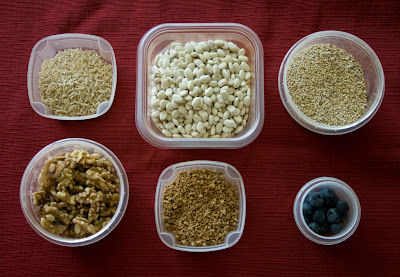
For my family, throwing out the granola bars made a significant difference. At first it made sense to me to buy low-sugar granola bars in bulk. They were relatively healthy and we could eat them on the run. The problem was, I liked them so much, I ate them all the time. Eventually, I realized I ought to be eating whole grain bread or rice, nuts, and fruit instead.

The great thing is, any one of these things cost less per ounce than the bars. The grains--which made up the bulk of the bars anyway--cost much less. I stopped buying the bars and, when they were no longer an option, I started eating healthier replacements. I save money every month, just by cutting them out.

Here are a few other adjustments we are working on:

-more beans and lentils, less meat
-whole grain bread and rice as staples (good, cheap, solid, healthy calories)
-more seasonal fruits
-only very inexpensive, healthy cereals
-more whole vegetable, fewer prepared veggies
-no more frozen pizza (I have to admit, sometimes I get nostalgic about these)
-if I am desperate for cookies, then I have to make them myself